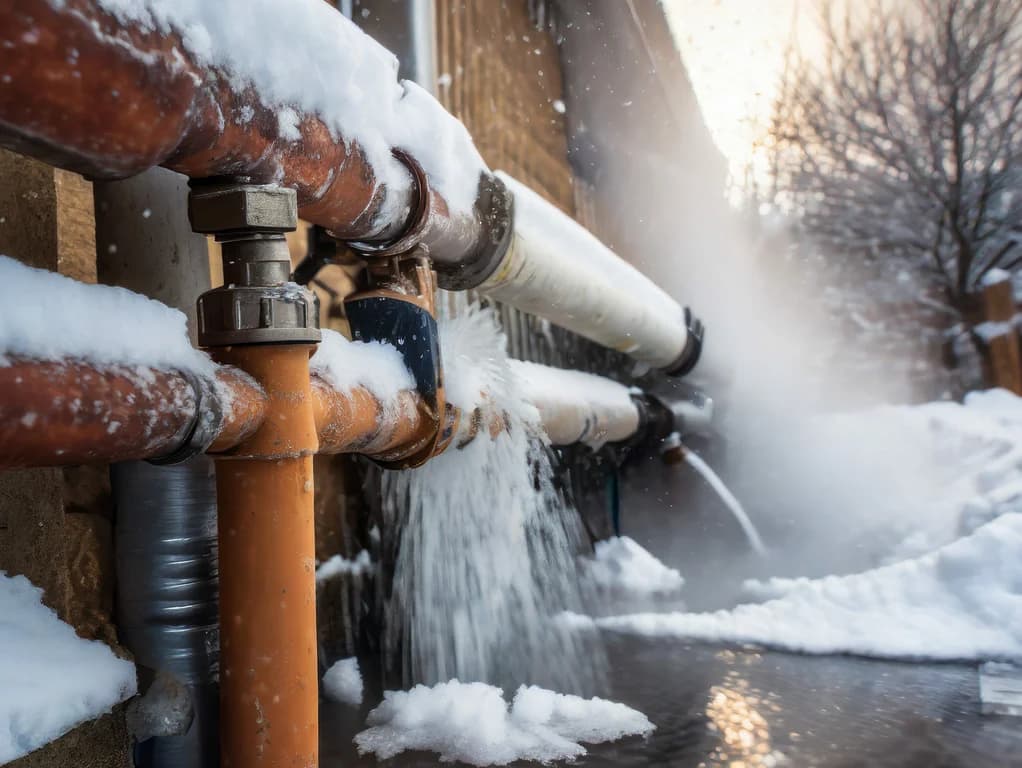

Freezing weather can leave pipes vulnerable in exterior walls, crawl spaces, attics and other areas exposed to cold air. These four common myths explain how to reduce the risk and what to do when a line stops flowing.
Myth #1: Only A Plumber Can Prevent Frozen Pipes
Homeowners and property managers can reduce frozen-pipe risk with basic maintenance:
- Seal drafty windows and doors. Use window film, weatherstripping or another appropriate draft barrier.
- Add extra insulation around water lines in basements, attics, and crawlspaces.
- Leave sink and vanity doors open to allow warmer air to enter them.
- Install heat tapes around exposed water lines, especially if the water lines are located on or near outside walls.
- Disconnect outdoor hoses and follow the fixture manufacturer’s winterization instructions.
Myth #2: Risks Are Gone When Temperatures Rise
A frozen pipe may not reveal a split until the ice begins to thaw. The frozen section can temporarily block water from reaching the damaged area. When the ice melts, water may begin flowing from the split, which is why the area should be monitored and the water supply should be controlled during thawing.
Myth #3: Propane Torches Can Be Used To Thaw Pipes
Do not use a propane torch to thaw a pipe. Open flame near drywall, wood and insulation can start a fire. Use a safer heat source or call a licensed plumber.
Myth #4: All Frozen Pipes Burst
A frozen pipe does not always split. If a line stops flowing, shut off the water supply when you can do so safely, open the affected faucet and call a licensed plumber. Do not use an open flame, unattended lamp or other improvised heat source to thaw the pipe.
If a frozen pipe has released water into the building, call Cleveland Water and Fire Restoration, Inc. at any hour for frozen and burst pipe water damage cleanup. A First Responder is typically on site within 1 hour to establish the next course of action. Extraction and drying follow once the plan is set. Our winter water damage guide covers additional steps for leaks, ice dams and snowmelt.