A person answers 24/7. Call (440) 659-2188
Cleveland Water and Fire Restoration, Inc. logo — In your time of need, we’re the family you can count on!

Ceiling and wall water damage cleanup in Cleveland

Wet walls or ceilings? Call us.

We find the wet areas and explain what can be dried in place.

Call (440) 659-218824/7

A First Responder is typically on site within 1 hour to establish the next course of action.

4.8 from 553 Google reviews
A handheld thermal camera showing temperature differences across a kitchen ceiling during a water damage inspection

Find the moisture. Make a drying plan.

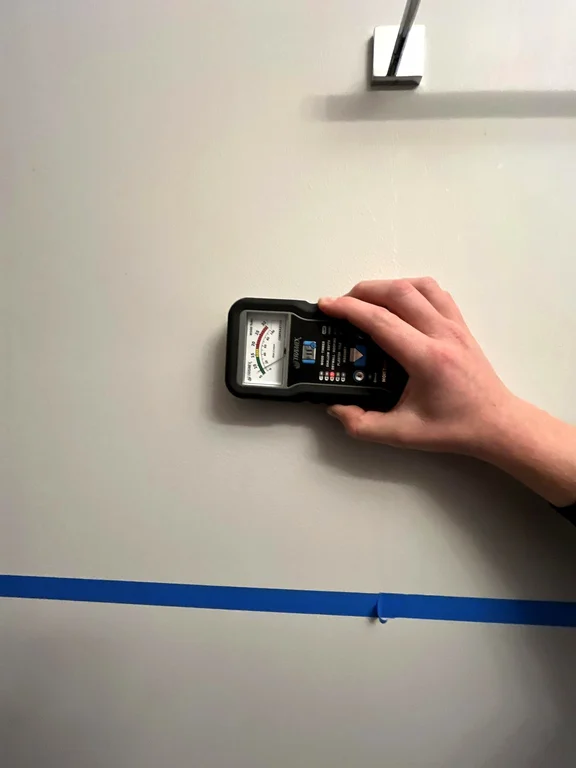
A moisture meter checking a painted wall above a marked inspection line

Check beyond the visible stain.

Moisture readings help us assess nearby walls and ceilings, including areas that look untouched.

Drying hoses feeding into a kitchen ceiling above the cabinets

Dry inside the cavity.

Where conditions allow, targeted airflow reaches the wet space behind the surface so materials can stay in place.
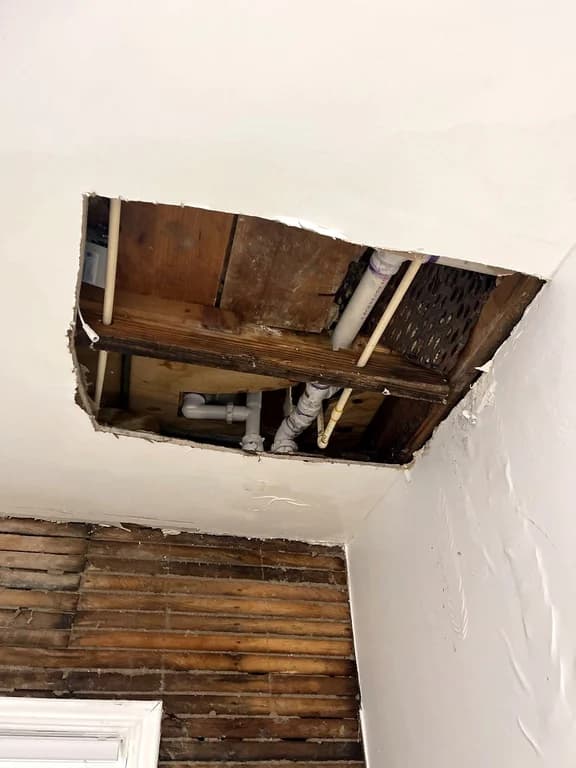
An opened ceiling and wall showing wood framing and plumbing after water damage

Remove what cannot stay.

If materials are damaged or cannot be properly dried, we explain what needs to come out.

Card 1 of 3

From the first stain to a drying plan.

Step 1

Tell us where you see damage.

Call 24/7. Tell us when you noticed it, whether water is still coming in, and which rooms are affected.

Step 2

Have the wet areas assessed.

Your First Responder checks the affected materials and explains the options. A plumber or roofer may also be needed to fix the leak.

Step 3

Begin the agreed drying work.

The crew sets up drying equipment and monitors moisture readings. Any necessary material removal is included in the plan.

Card 1 of 3
Two restoration technicians preparing a dehumidifier beside their response van

What the surface can tell you.

Serving Cleveland and Northeast Ohio
A stain after an upstairs leak
Water may have traveled from a bathroom, laundry room, or pipe above. We assess the ceiling and adjoining areas.
A wall that feels dry again
The finish can feel dry while moisture remains inside. Readings help determine whether further drying is needed.
Damage that needs an opening
Some materials need removal to reach wet areas. Drywall replacement and painting follow the cleanup and are handled by professional trades.
Common questions

A few things you may be wondering.

Do wet walls and ceilings always need to be torn out?

No. The water source, material condition, and access to the wet area affect the decision. We use targeted drying where appropriate and explain when removal is needed.

Can a ceiling still be wet after the leak stops?

Yes. Stopping the leak prevents more water from entering, but moisture may remain in the ceiling, insulation, or framing. We assess those materials before recommending the next step.

Do you fix the leaking pipe, roof, or damaged drywall?

Cleveland Water and Fire Restoration, Inc. handles water damage assessment, cleanup, and drying. Plumbers and roofers repair the source; professional trades handle drywall replacement, painting, and other permanent repairs.

How long does wall or ceiling drying take?

It depends on the materials, how much moisture is present, and access to the wet area. We monitor readings during the work rather than promise one drying time for every home.
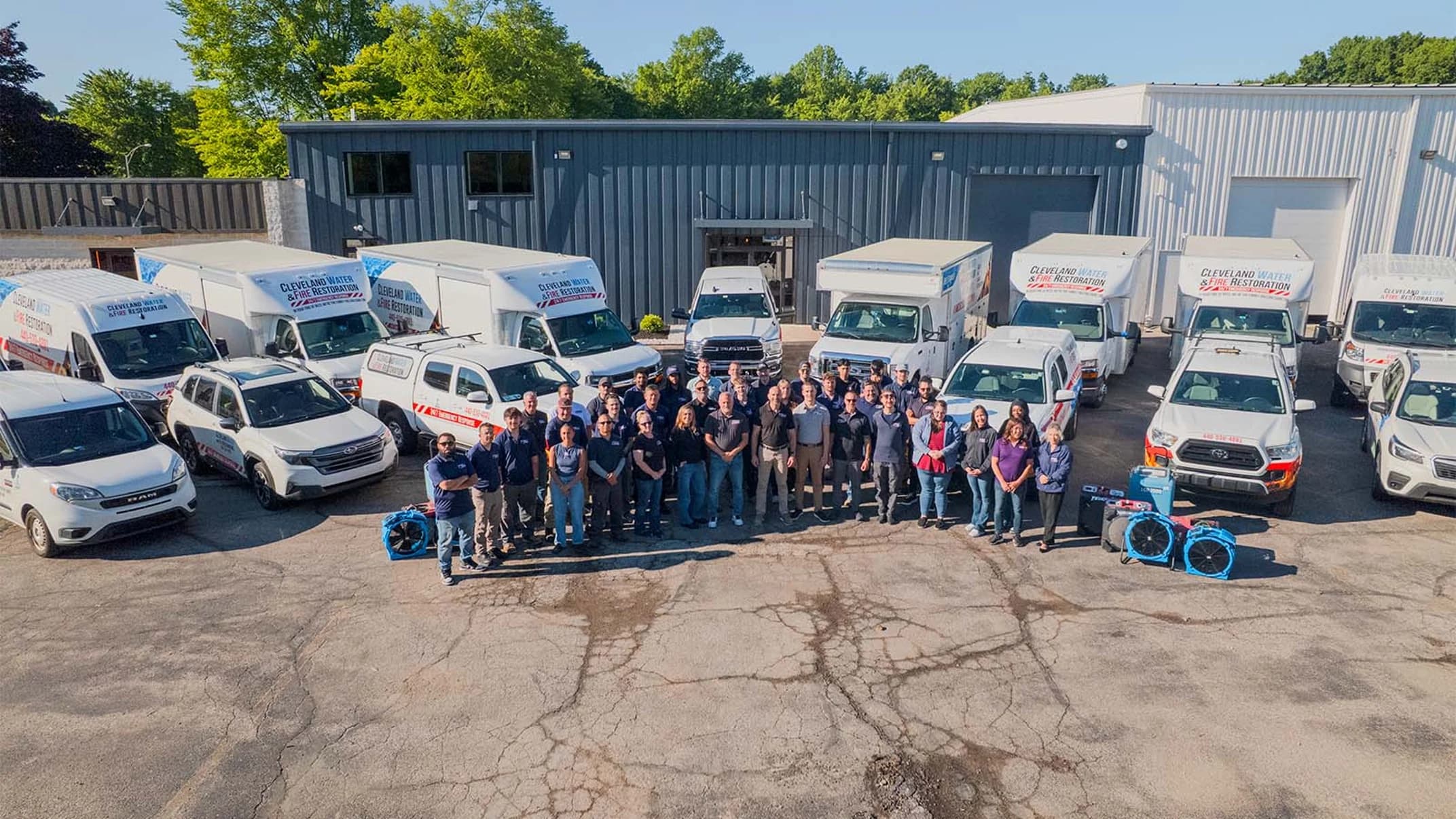
The Cleveland Water and Fire Restoration, Inc. team with their response vehicles outside the Solon facility

Water damage above or behind the surface? Call us.

A First Responder is typically on site within 1 hour to establish the next course of action. The on-site consultation comes with no obligation.