A person answers 24/7. Call (440) 659-2188
Cleveland Water and Fire Restoration, Inc. logo — In your time of need, we’re the family you can count on!

Emergency water extraction in Cleveland

Standing water? Call us.

We remove the water and check what is still wet underneath.

Call (440) 659-218824/7

A First Responder is typically on site within 1 hour to establish the next course of action.

4.8 from 553 Google reviews
Two restoration technicians preparing a dehumidifier beside their response van

Get the water out. Find where it went.

Standing water across the floor of an unfinished basement before water removal

Remove standing water.

We select extraction equipment for the floor, carpet, or room affected by the loss.
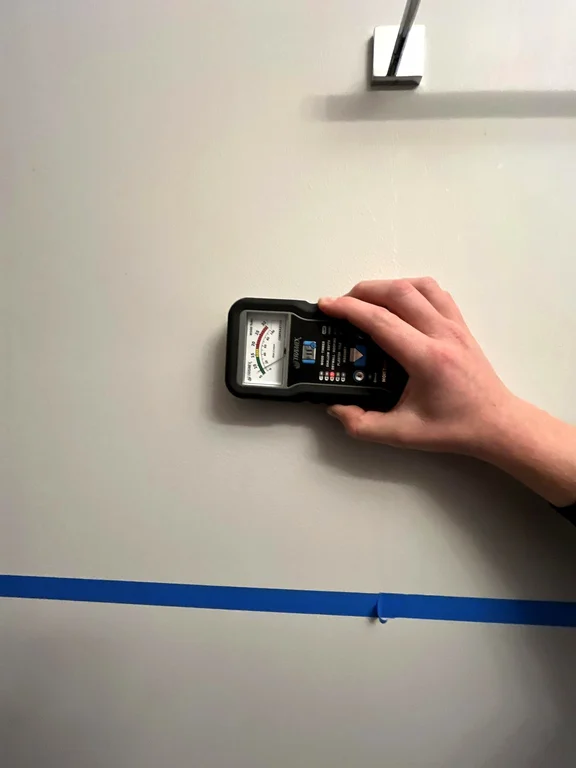
A moisture meter checking a painted wall above a marked inspection line

Check beyond the puddle.

Readings help identify moisture in nearby walls and building materials after visible water is removed.
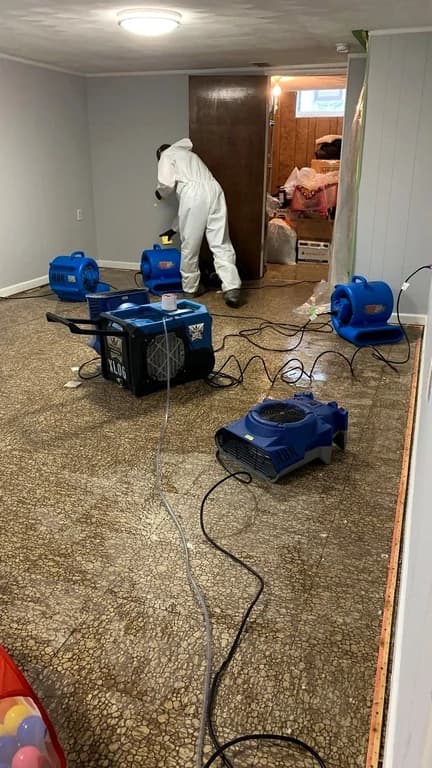
A technician working beside air movers and a dehumidifier in a water-damaged room

Set up the drying.

The next step depends on what got wet. Air movers and dehumidifiers dry materials that can stay.

Card 1 of 3

One call starts the assessment.

Step 1

Tell us where the water is.

Call 24/7 with the property location, affected rooms, and whether water is still entering.

Step 2

Get a plan for removal.

Your First Responder assesses the water source, the materials, and access for the cleanup crew.

Step 3

Extract, then check the materials.

Once the plan is agreed, the crew removes water and checks what needs further drying or removal.

Card 1 of 3
Technicians arranging blue air movers and hoses along a warehouse aisle

Choosing the company that comes to your door.

Zakhar and Steve discuss what to look for when you need a restoration company.

What happens after extraction?

Serving Cleveland and Northeast Ohio
Carpet and padding
Removing surface water may leave moisture in the layers beneath. We assess the carpet, padding, and subfloor.
Walls, ceilings, and floors
Moisture readings guide the drying work. An empty floor does not tell us whether the building materials are dry.
A leak that is still running
Let us know on the call. A plumber or other appropriate trade handles the source repair while we plan the water cleanup.
Common questions

A few things you may be wondering.

What is the difference between water extraction and drying?

Extraction removes standing water. Drying addresses moisture left in the affected materials. A water-damaged room may need both.

Can you remove water from carpet and hard floors?

Yes. Cleveland Water and Fire Restoration, Inc. extracts water from carpet, basement floors, and other affected areas. The water source and floor materials determine the equipment and cleanup approach.

Can I call if the leak has not been fixed yet?

Yes. Tell us whether water is still entering. We assess the cleanup needs; a plumber or the appropriate professional trade handles the leak repair.

How soon can someone assess the water?

A First Responder is typically on site within 1 hour to establish the next course of action. Cleanup follows the agreed plan; the assessment is not a promise that extraction will be completed within an hour.
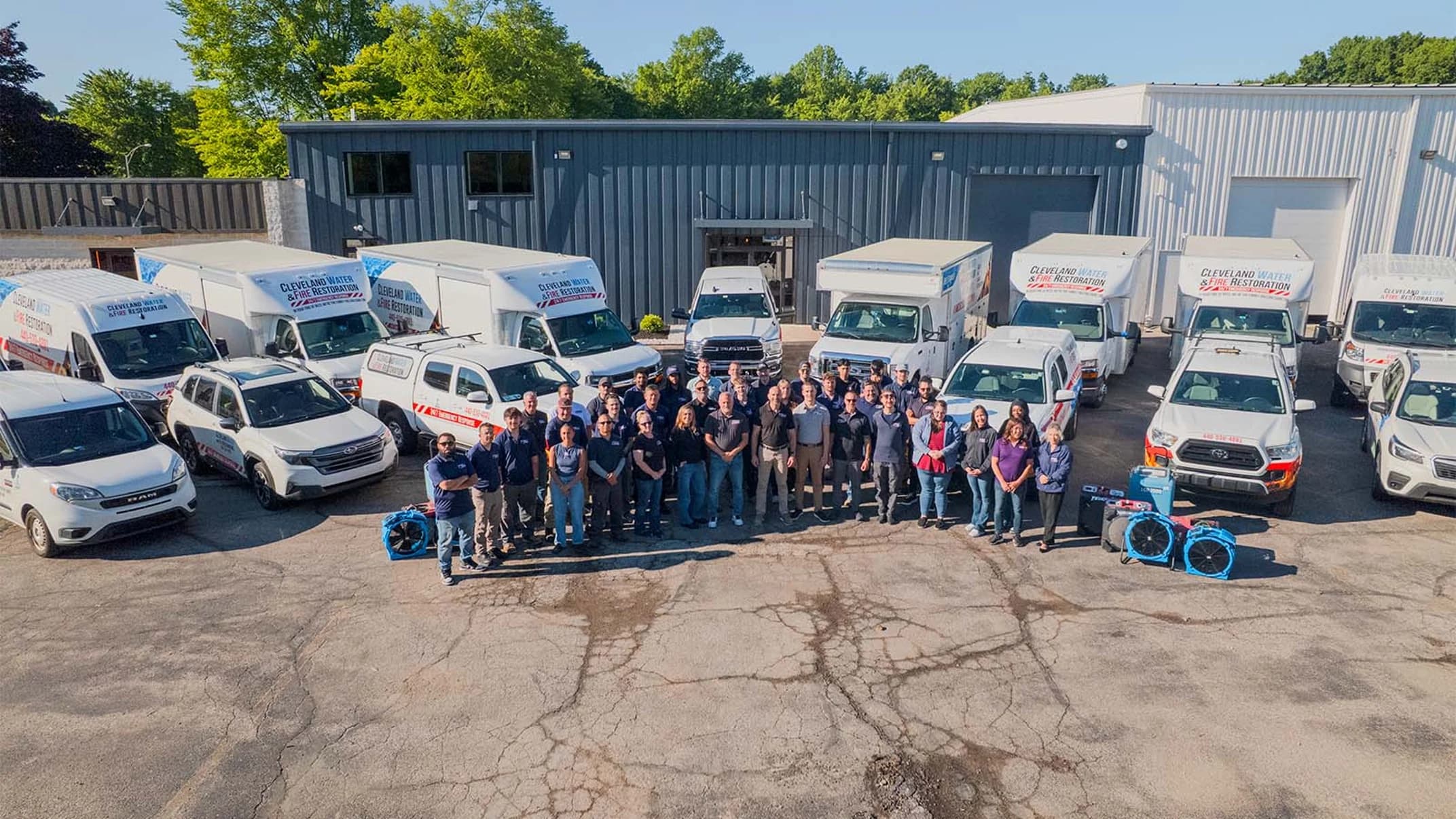
The Cleveland Water and Fire Restoration, Inc. team with their response vehicles outside the Solon facility

Need the water removed? Call us.

A First Responder is typically on site within 1 hour to establish the next course of action. The on-site consultation comes with no obligation.