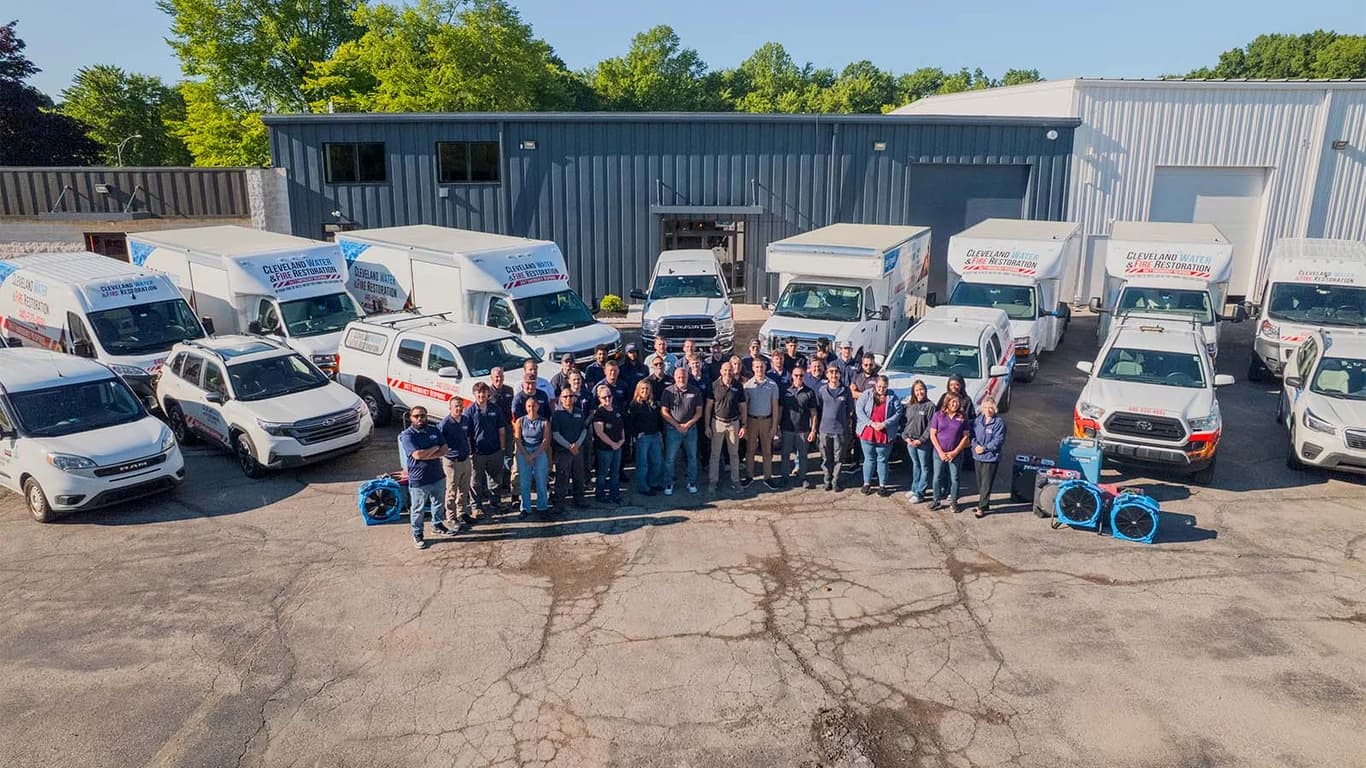
After the fire department leaves, there is a long list of decisions to make, usually while you are still in shock. The house has to be secured, your family needs a safe place to stay, your insurance agent needs to hear from you, and someone has to decide what happens to everything inside. The video below walks through the whole process in the order most families face it.
If the fire was only hours ago, start with our guide to the first 24 hours after a fire.
Video transcriptFire Restoration: The Full Process
So, unfortunately, you have experienced fire and smoke damage in your home. I am so sorry you and your family had to go through such an event that could be life-altering. We want to help you navigate through the fire restoration process and get your life back to normal to the best of our ability. First, we need to get your house secured and prevent any secondary damages. In an event when the firemen had to kick the door in or break windows, it will need a secure board up service.
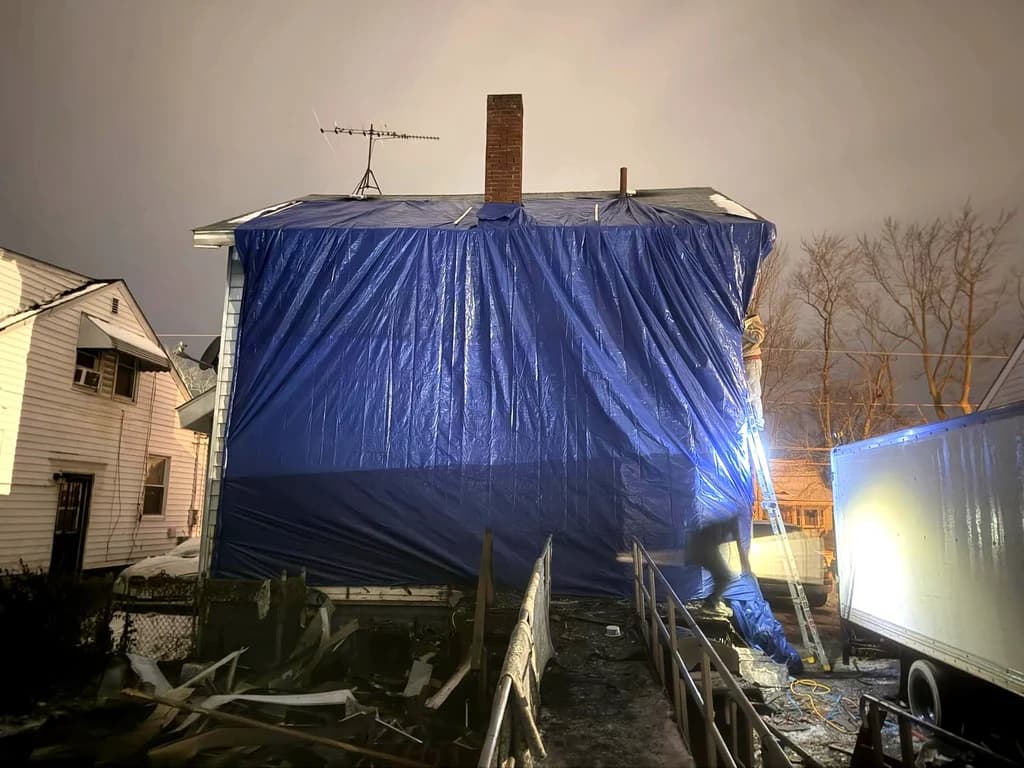
If there is a roof damage, it would need a tarping service to prevent additional water damages. Our company provides 24-7, 365 days per year emergency board up and roof tarping service. Call us anytime, any day. We will usually arrive at your home within one hour. Something you should watch out for before hiring a board up and fire restoration contractor: homeowners who experience any kind of disasters like the fire damage could be in a vulnerable emotional state and could easily fall prey to manipulating techniques employed by some contractors.
When you are signing the emergency board up or tarping contract, some of these contracts might force you into using the company for not just the board up service, but also for the mitigation, cleanup, and even reconstruction services. Fire mitigation and cleanup are very different from reconstruction. Reconstruction after fire can be pretty extensive. It could involve carpentry, drywall, cabinets, flooring, electrical, and sometimes even gutting the entire house to the studs and other major structural repairs.
You want to ensure that the contractor you choose to put your home back together is experienced and is able to provide quality service so the value of your home won't be affected after the restoration is completed. That's why you need time to research the contractor you want to hire for the fire restoration. Cleveland Water and Fire Restoration, Inc. specializes in emergency board up, tarping, water, fire, and smoke cleanup and mitigation, and we utilize our sister company, Keselman Construction Group, for the reconstruction phase of the project.
We chose this route because Keselman Construction Group is a highly rated remodeling and construction company that has the craftsmen, designers, project managers, suppliers, and processes specific to the reconstruction, which means the project could run a lot smoother with better design and overall quality. I highly encourage you to research Keselman Construction Group online. Take a look at their project photos and read the reviews from their past customers. What should you focus on right after the fire has been put out by the firemen?
Make a list of valuables and sentimental items in your home, such as photographs, important documents, jewelry, firearm, artworks, and other items that have significant emotional and monetary value. Share your list with the restoration contractor. Make sure they properly document and handle those valuable items. These types of items may require specialized cleaning and restoration if possible. Also, make the list of your medications so they can be refilled timely. A natural question you might have, will my insurance cover my fire damage?
Most home insurances cover fire and smoke damages that are sudden and unexpected. What kind of fires are typically not covered by the home insurance? Intentional fires such as arson would be considered fraud and are not covered by the insurance. Fires caused due to the owner's negligence. Think using an outdoor deep fryer inside the property might be denied by the insurance. Properties that have been vacant for over 30 days and had fire might also be denied the coverage. Do you have the right insurance coverage if you have fire and smoke damage?
There are typically separate coverages for the contents of your home, the structure itself, and any living expenses incurred due to the fire damage. What's the difference between the contents and the structure? Imagine if I could pick up and shake your house upside down and the items that would fall would typically be considered contents. They include furniture, appliances, electronics, house decor, and personal belongings that are not part of the construction of your home.
I highly recommend speaking with your insurance agent to ensure you have adequate contents coverage with realistic limits to ensure you would have enough money to clean and store or replace the items in your home, as well as adequate property coverage to mitigate clean up and have enough money for the reconstruction of your home after fire. Also, check with your agent about your temporary living expenses coverage, such as rent or hotel stay, food, and other additional living expenses due to the fire.
Is it dangerous to live in a house after smoke and fire damage? If there is soot and smoke damage, it's not recommended to stay at your house due to the respiratory health risks. Remember, soot is carcinogenic. In addition, the house might not be structurally sound, as well as without the running water, heat, and electricity. Most of the time, the additional living expenses are covered by your insurance. Our company could help find the temporary housing for you and your family until your house is restored and safe to move back in.
What work should you do first before starting the work after the fire damage? Something to keep in mind before restoration can begin at your home, it needs to be cleared by the fire department. The fire department has to finish their investigation before the work can start. If you start the work before the investigation has been cleared, you might tamper with the scene.
If there is no heat due to the shut-off of electrical and gas by the fire department and the temperatures are below freezing, ensure the house is winterized to avoid burst pipes and other plumbing issues which could cause additional water damage. If there is water damage from putting out the fire, the priority should be drying the structure to avoid mold damage and other secondary damages. What happens to the affected contents in your home after the fire?
Before the mitigation and cleanup begins, the contents need to be inspected, inventoried and documented. The homeowner should discuss with the contractor and adjuster which items they would like to restore if possible. The adjuster and homeowner will need to approve which contents to be disposed of. After the approval, the items would be packed and transported to be professionally cleaned and safely stored or disposed of. The contents will be transported back to the house after the fire and smoke restoration is completed.
What can be saved versus thrown away after the fire? Non-permeable non-porous materials that weren't burned by the direct fire but are covered in soot typically can be cleaned and restored such as metal, glass, ceramics and sealed surfaces such as wood. Items that can be washed such as clothes or bedding or towels and drapery will need to be inspected and possibly salvaged. After the items have been professionally inventoried, documented and cleaned, they will need to be stored in the storage vaults until it's safe to return them to your home.
Porous items that can't be washed or sealed such as mattresses, pillows, couches and other upholstery items would most likely need to be inventoried, communicated to the adjuster for approval and disposed of. Items that are consumable such as food, medication and cosmetics that have been exposed to the excessive heat would need to be disposed of due to the safety reasons. Electronics would need to be inspected for physical damage associated with heat and if the damage is found, most likely would need to be disposed of.
The adjusters might request to dispose of items that could have potentially been cleaned but because of the cost of restoration versus replacement is too high. Will the contents be cleaned on site or somewhere else? The only time the contents could be cleaned and stored on site is when there is an unaffected and safe storage area of the house that would allow for the professional cleaning and storage. Additionally, those contents are not restricting the homeowners from normal home living.
Valuable and sentimental items that require specialized, restorative services such as jewelry, firearms, documents, photographs, artwork, heirlooms, electronics, appliances and pool tables would need to be inventoried, documented and then transported to the specialized cleaning vendors. Can you clean up after the fire damage on your own as a DIY project? The short answer is if you are not experienced in fire and smoke restoration, no. It could create more problems down the road.
You see the thing about fires is when you have a fire in your home, that pressure that is created by the heat pushes the soot and smoke all throughout the home, whether it's through the duct work or through the openings in the door, even though you might only have fire in one area of your home, let's just say the basement, but that fire is pushed all throughout the home. In addition, different materials in your home are porous materials such as drywall or wood. And when those materials heat up, those pores open up and they take in the smoke and soot.
And then when the house cools down, those pores close up. And so if you don't properly clean your home after the fire and then you move in after you've done some reconstruction and remodeling after fire and you turn the heat on in your home, now those pores and those materials are going to open up and you're going to start smelling that smoke smell that you can't get rid of.
Another big mistake that we've seen happen is people will just get a sealer, like a proper fire sealer, and they think that I don't need to properly clean the surfaces before sealing and they just apply that sealer over walls or ceilings or other surfaces. And what they don't realize that often because of the fires, there are oils with soot on those surfaces. And now that soot and those oils are embedded into that sealer and it will continue smelling like smoke.
That is why when we clean after fire restoration, we utilize the right process, systems, equipment, and you have to have experience and skill to clean up after the fire damage. So once your mitigation and cleanup has been completed after fire and smoke damage, who should you hire for the reconstruction phase of your project? You see, mitigation and cleanup is very different than the reconstruction. You wouldn't want your plumber to do work on your electrical panel, right? It is the same thing with the mitigation versus reconstruction.
Too often, the restoration companies utilize the same technicians that are doing the cleanup to do the remodeling work in your home after fire. You see, we opened Cleveland Water and Fire Restoration, Inc. in 2020 because we saw a need for a quality restoration company that focuses on the mitigation and cleanup only. And then it's able to pass on the reconstruction work to our construction company, Keselman Construction Group, that has been in business since 2004, over 21 years.
I highly encourage you, before you hire a restoration contractor, especially for your reconstruction part of the project, please take a look online, read customer's reviews. I encourage you, go and research Keselman Construction Group. Look at their before and after photos. Ask them for references from the homeowners that they have helped to do the reconstruction of their house after the fire.
I can tell you, if this was my personal house, what I would want is I would hire a restoration company to take care of mitigation and cleanup, and I would want to hire a remodeling and construction company to do the reconstruction on my home. Because it's two different skills to do the cleanup of the surfaces versus installing cabinets, countertops, and tile. Please give Keselman Construction a call for a free estimate.
How do you secure the house after a fire?
If firefighters had to force a door or break windows to get in, those openings need to be boarded up. If the roof was damaged, it needs a tarp so rain and snow do not cause more water damage. Securing the house comes first because it keeps the damage from getting worse while everything else is decided.
Cleveland Water and Fire Restoration, Inc. provides emergency board-up and roof tarping 24 hours a day, 365 days a year. A First Responder is typically on site within 1 hour to establish the next course of action.
What should you check before signing a board-up contract?
Read it carefully before you sign. After a fire, people are understandably shaken, and some emergency board-up or tarping contracts also commit you to the same company for the mitigation, the cleanup and even the reconstruction.
Those are different jobs. Mitigation and cleanup deal with the water, soot and smoke. Reconstruction can involve carpentry, drywall, cabinets, flooring and electrical work, and sometimes gutting the house to the studs. Take the time to research whoever will put your home back together, because the quality of that work affects the value of your home.

What should you do right after the fire is out?
Make a list of the valuable and sentimental things in your home: photographs, important documents, jewelry, firearms, artwork and anything else that matters to you or is worth a lot. Share that list with your restoration contractor and make sure they document and handle those items properly. Many of them may need specialized cleaning.
Make a list of your medications, too, so they can be refilled on time.
What should you ask your insurance agent?
Your insurance company decides what your policy covers. Many homeowner policies have separate coverage for the contents of your home, the house itself and the extra living expenses a fire causes, so ask your agent about each one:
- Contents are the things that would fall out if you could pick up your house and turn it upside down: furniture, appliances, electronics, decor and personal belongings. Ask whether your limit is realistic for cleaning, storing or replacing them.
- The structure is the house itself. Ask whether your coverage is enough for the cleanup and the rebuild.
- Temporary living expenses are costs like rent or a hotel stay and food while you cannot live at home. Ask what your policy includes.
We document the loss for your claim and work directly with your adjuster.

Is it safe to stay in the house after a fire?
We do not recommend it when there is soot and smoke damage. Breathing soot and smoke residue may pose respiratory health risks, and the house may not be structurally sound. It may also be without running water, heat or electricity. Plan to stay somewhere else until the house has been restored and is safe to move back into.
What has to happen before the work can start?
The fire department has to clear the house first. Restoration cannot begin until their investigation is finished, and starting early could disturb the scene.
If the fire department shut off the electricity and gas and the temperature drops below freezing, the house needs to be winterized so pipes do not burst and cause more water damage.
If water from putting out the fire is still in the house, drying the structure comes first to help prevent mold and other secondary damage.
What happens to your belongings after a fire?
Before the cleanup begins, your belongings are inspected, inventoried and documented. You, your restoration contractor and your adjuster discuss which items you would like restored where possible, and you and the adjuster approve anything that has to be disposed of.
Once that is approved, items are packed and taken away to be professionally cleaned and safely stored, or disposed of. Your belongings come back to the house after the fire and smoke restoration is finished.
Can your belongings be cleaned at the house?
Only when part of the house was unaffected and is safe for professional cleaning and storage, and only if keeping your belongings there will not get in the way of normal living.
Valuable and sentimental items that need specialized restoration, such as jewelry, firearms, documents, photographs, artwork, heirlooms, electronics, appliances and pool tables, are inventoried, documented and sent to specialized cleaning vendors.
What can be saved and what has to be thrown away?
- Hard, non-porous items that were covered in soot but not burned, such as metal, glass, ceramics and sealed wood, can typically be cleaned and restored.
- Washable items such as clothing, bedding, towels and drapery need to be inspected and may be salvageable. After cleaning, they are stored until it is safe to bring them home.
- Porous items that cannot be washed or sealed, such as mattresses, pillows, couches and other upholstered furniture, usually have to be inventoried, approved by your adjuster and disposed of.
- Food, medication and cosmetics exposed to high heat need to be thrown away for safety.
- Electronics need to be inspected for heat damage. If there is damage, they usually have to be disposed of.
Your adjuster may also ask to dispose of items that could be cleaned when restoring them would cost more than replacing them.
Can you clean up fire damage yourself?
Not unless you have experience in fire and smoke restoration. A DIY cleanup can create bigger problems later.
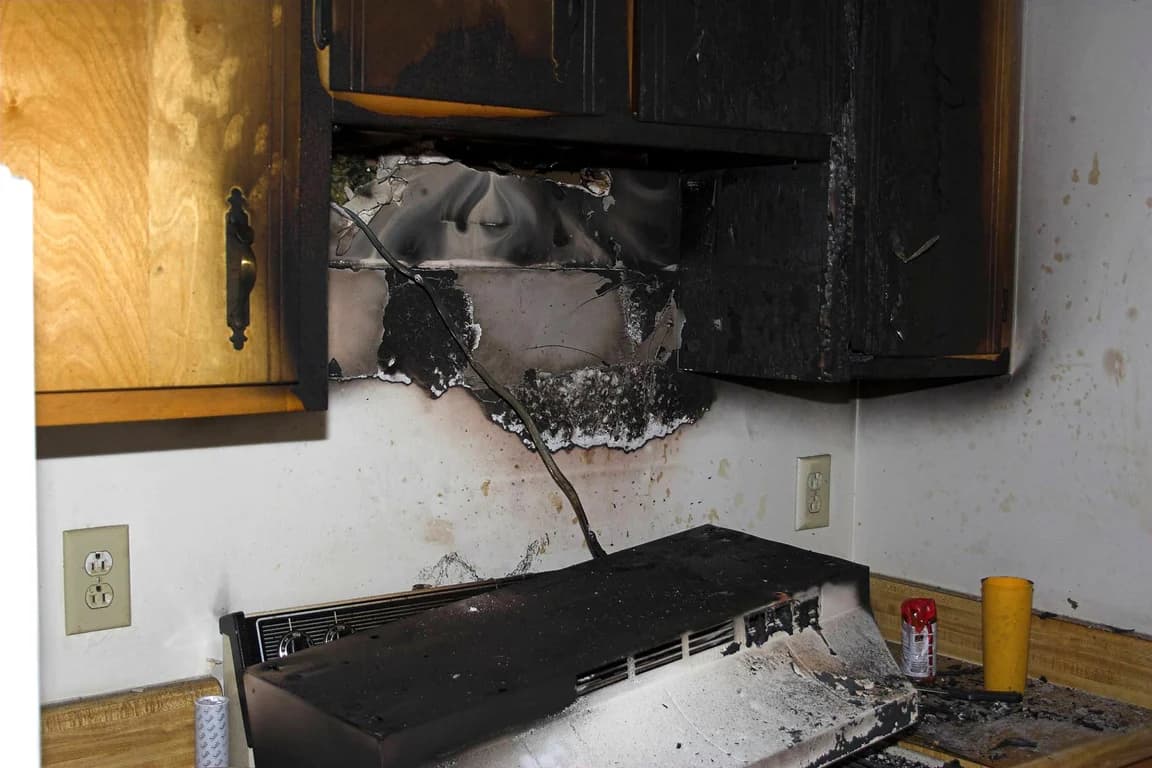
When there is a fire in your home, the heat creates pressure that pushes soot and smoke through the whole house, through the ductwork and the gaps around doors. A fire in the basement can still leave residue upstairs.
Porous materials like drywall and wood also open up as they heat, take in smoke and soot, and close again as the house cools. If those surfaces are not properly cleaned, the smoke smell can come back the first time you turn on the heat after moving back in, even after the remodeling is done.
Another common mistake is applying a fire sealer to walls or ceilings without cleaning them first. Fires leave oily soot on surfaces, and sealing over it locks that residue into the sealer, so the room keeps smelling like smoke. Proper smoke and soot cleanup takes the right process, equipment and experience.

Who should handle the rebuild after the cleanup?
Mitigation and cleanup take different skills from reconstruction. You would not want your plumber working on your electrical panel, and the same goes here: cleaning surfaces is a different job from installing cabinets, countertops and tile. Too often, restoration companies send the same technicians who did the cleanup to do the remodeling.
That is why we focus on mitigation and cleanup only. The rebuild is carried out by professional tradesmen, and our project manager facilitates communications between you, the municipality, our suppliers and the tradesmen to make sure things run smoothly and the timeline is followed.
Whoever you hire for the rebuild, read their customer reviews, look at their before-and-after photos and ask for references from homeowners they have helped after a fire.
Has your home been damaged by a fire? Give us a call.
We answer 24/7, and a First Responder is typically on site within 1 hour to establish the next course of action. The on-site consultation comes with no obligation. You can also read more about our fire damage cleanup and restoration.